Gold Bar Dimensions: Standard Size, Weight & Measurements
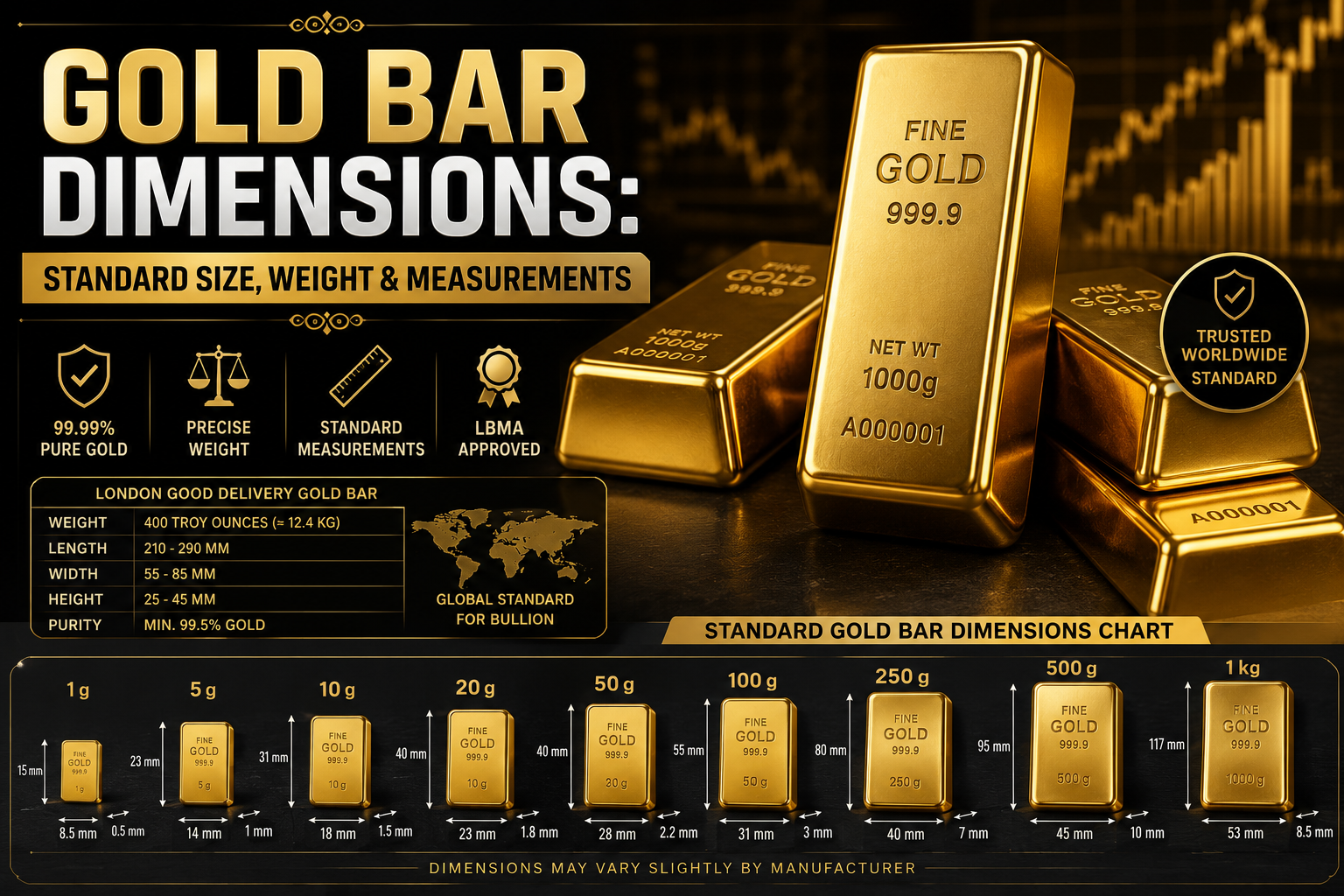
Understanding gold bar dimensions is essential whether you’re investing in precious metals, collecting bullion, or simply learning about standard gold bar sizes. Gold bars are available in various weights and dimensions, from small 1-gram bars to the internationally recognized 400-ounce London Good Delivery bar.
This guide explains standard gold bar dimensions, weight categories, and measurements in inches, centimeters, and millimeters to help you compare different bar sizes with confidence.
What Are Gold Bar Dimensions?
Gold bar dimensions refer to the length, width, thickness, and weight of a bullion bar. These measurements vary depending on the bar’s weight and the refinery that manufactures it.
Most investment-grade gold bars are produced according to internationally recognized standards, making them easy to trade and store.
Standard Gold Bar Size Chart
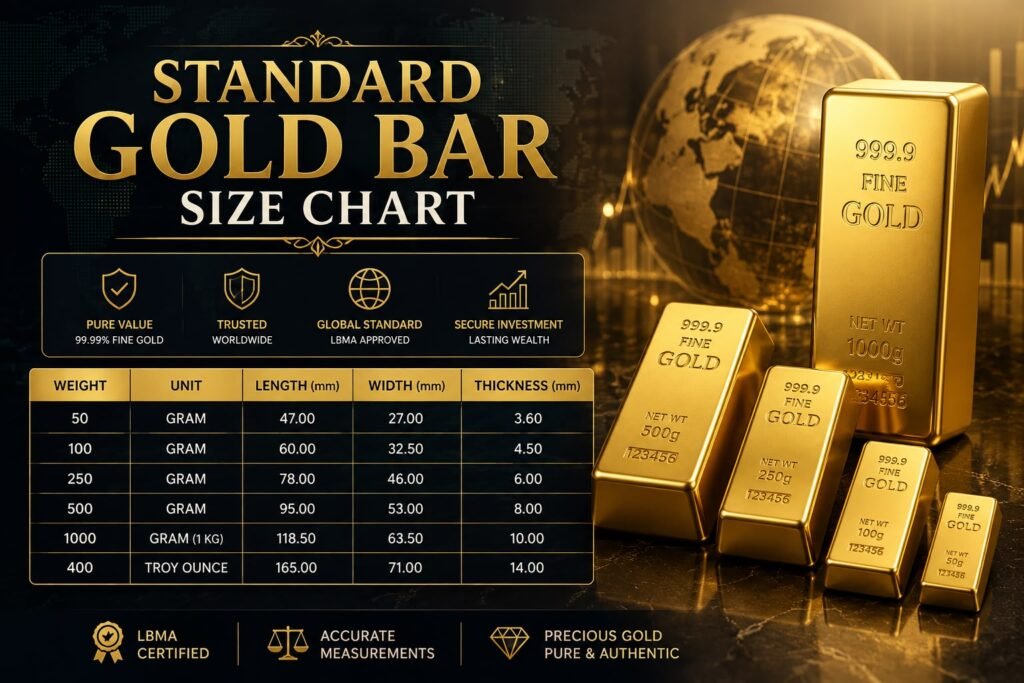
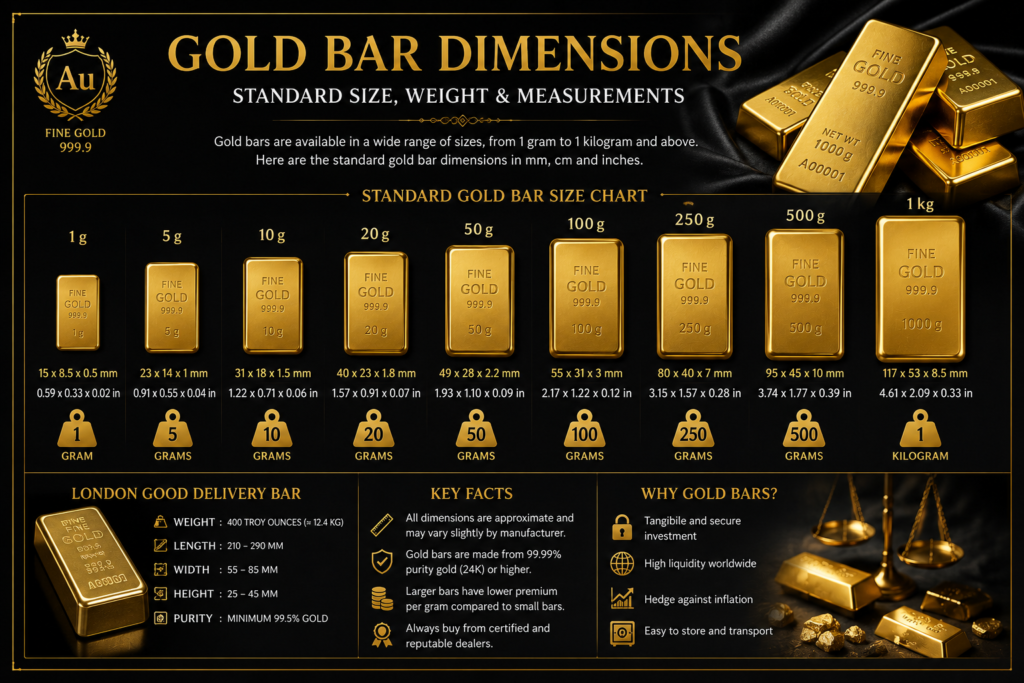
The table below shows the approximate dimensions of common investment gold bars.
| Gold Bar Weight | Approx. Dimensions (mm) | Approx. Dimensions (Inches) |
|---|---|---|
| 1 g | 15 × 8.5 × 0.5 | 0.59 × 0.33 × 0.02 |
| 5 g | 23 × 14 × 1 | 0.91 × 0.55 × 0.04 |
| 10 g | 31 × 18 × 1.5 | 1.22 × 0.71 × 0.06 |
| 20 g | 40 × 23 × 1.8 | 1.57 × 0.91 × 0.07 |
| 50 g | 49 × 28 × 2.2 | 1.93 × 1.10 × 0.09 |
| 100 g | 55 × 31 × 3 | 2.17 × 1.22 × 0.12 |
| 250 g | 80 × 40 × 7 | 3.15 × 1.57 × 0.28 |
| 500 g | 95 × 45 × 10 | 3.74 × 1.77 × 0.39 |
| 1 kg | 117 × 53 × 8.5 | 4.61 × 2.09 × 0.33 |
Note: Dimensions may vary slightly depending on the refinery and manufacturing process.
Common Gold Bar Weights
Gold bars are produced in different sizes to suit both individual investors and institutional buyers.
Small Gold Bars
Small bars are popular for beginners because they are affordable and easy to store.
Common weights include:
- 1 gram
- 2.5 grams
- 5 grams
- 10 grams
- 20 grams
Medium Gold Bars
Medium-sized bars offer a balance between value and portability.
Common weights include:
- 50 grams
- 100 grams
- 250 grams
- 500 grams
Large Gold Bars
Large bullion bars are commonly used by banks, central banks, and institutional investors.
Popular sizes include:
- 1 kilogram
- 400 troy ounces (London Good Delivery)
Gold Bar Dimensions in Inches, CM & MM
Different manufacturers publish dimensions using either the metric or imperial system.
| Unit | Example (100 g Gold Bar) |
|---|---|
| Inches | 2.17 × 1.22 × 0.12 |
| Centimeters | 5.5 × 3.1 × 0.3 |
| Millimeters | 55 × 31 × 3 |
Using multiple measurement units makes it easier to compare products sold in different countries.
Gold weight can be expressed using different units, so our Pounds to Kilogram Converter can help with weight conversions
Why Gold Bar Dimensions Matter
Knowing the correct dimensions helps you:
- Compare different gold bars before buying.
- Select the right storage box or safe.
- Verify product specifications.
- Estimate shipping and handling requirements.
- Choose a bar that suits your investment budget.
Understanding both weight and dimensions ensures you make a more informed purchase.
Types of Gold Bars
Gold bars are mainly available in two types: Minted Bars and Cast Bars. Both contain high-purity gold, but they differ in appearance and manufacturing.
Minted Gold Bars
Minted bars are cut from precision-made gold sheets and have smooth edges with a polished finish.
They are ideal for:
- Small investors
- Gift purchases
- Collectors
Common sizes include 1 g, 5 g, 10 g, 20 g, 50 g, and 100 g.
Cast Gold Bars
Cast bars are made by pouring molten gold into molds. They usually have a rougher finish but are preferred for larger investments.
They are commonly available in:
- 250 g
- 500 g
- 1 kg
- 400 oz (London Good Delivery)
London Good Delivery Gold Bar Dimensions
The London Good Delivery (LGD) bar is the global standard used by banks and bullion markets.
| Specification | Approximate Value |
|---|---|
| Weight | 400 Troy Ounces (≈12.4 kg) |
| Length | 210–290 mm |
| Width | 55–85 mm |
| Height | 25–45 mm |
| Purity | Minimum 99.5% Gold |
These bars are primarily traded between financial institutions rather than individual investors.
The thickness of a gold bar increases as its weight increases.
| Weight | Approx. Thickness |
|---|---|
| 1 g | 0.5 mm |
| 10 g | 1.5 mm |
| 100 g | 3 mm |
| 1 kg | 8–9 mm |
Exact thickness may vary slightly depending on the manufacturer.
Gold bar dimensions may be listed in millimeters, making our Millimeter to Centimeter Conversion guide useful for measurement comparisons.
Gold Bar Weight vs Dimensions
Although larger bars contain more gold, they don’t increase proportionally in every dimension. Instead, they become both longer and thicker.
| Weight | Best For |
|---|---|
| 1–20 g | Beginners & Gifts |
| 50–100 g | Individual Investors |
| 250–500 g | Experienced Investors |
| 1 kg | High-Value Investment |
| 400 oz | Banks & Bullion Vaults |
Choosing the right size depends on your budget, storage capacity, and investment goals.
Tips for Choosing the Right Gold Bar
Before buying a gold bar, consider these factors:
- Choose a weight that fits your budget.
- Buy from reputable refiners or authorized dealers.
- Verify the bar’s purity and certification.
- Consider storage and insurance costs for larger bars.
- Compare dimensions if space or storage is important.
Smaller bars offer greater flexibility, while larger bars generally have lower premiums per gram.
For gold bar specifications given in inches, our Inch Measurement guide provides an easy conversion reference.
Storage and Handling Tips
Proper storage helps protect your gold bars and preserve their value over time.
- Store gold bars in a secure safe or bank vault.
- Avoid touching the surface with bare hands to prevent fingerprints.
- Keep bars in their original protective packaging whenever possible.
- Verify the serial number and certificate before purchasing.
- Handle larger bars carefully due to their weight.
Taking these simple precautions helps maintain the condition and authenticity of your investment.
Conclusion
Understanding gold bar dimensions makes it easier to compare different bullion sizes and choose the right investment. Whether you’re buying a 1-gram bar for a gift or a 1-kilogram bar for long-term investing, knowing the standard dimensions, weight, and measurements helps you make informed decisions.
Before purchasing, compare the bar’s size, purity, certification, and storage requirements. Choosing a reputable refiner and understanding standard dimensions will give you greater confidence in your investment. London Bullion Market Association (LBMA) – A trusted reference for London Good Delivery standards, gold bar specifications, and precious metals guidance.
Frequently Asked Questions
1. What are the standard gold bar dimensions?
Gold bar dimensions vary by weight. For example, a 100 g gold bar is approximately 55 × 31 × 3 mm, while a 1 kg bar measures about 117 × 53 × 8.5 mm.
2. What is the most common gold bar size?
Common investment sizes include 1 g, 10 g, 50 g, 100 g, and 1 kg.
3. What is a London Good Delivery gold bar?
A London Good Delivery bar is the international standard bullion bar weighing approximately 400 troy ounces (12.4 kg).
4. Are all gold bars the same dimensions?
No. The dimensions depend on the weight, manufacturer, and whether the bar is minted or cast.
5. How thick is a 1 kg gold bar?
A typical 1 kg gold bar is around 8–9 mm thick, although this may vary slightly by refiner.
6. Which gold bar is best for beginners?
Small bars such as 1 g, 5 g, or 10 g are ideal for new investors because they are more affordable and easier to store.
7. Why do gold bar dimensions vary?
Manufacturing methods, refinery designs, and bar weight can all affect the final dimensions.
8. How pure are investment gold bars?
Most investment-grade gold bars have a purity of 99.99% (24 karat), while London Good Delivery bars require a minimum purity of 99.5%.