Flyer Sizes: Complete Guide to Standard Flyer Dimensions for Printing
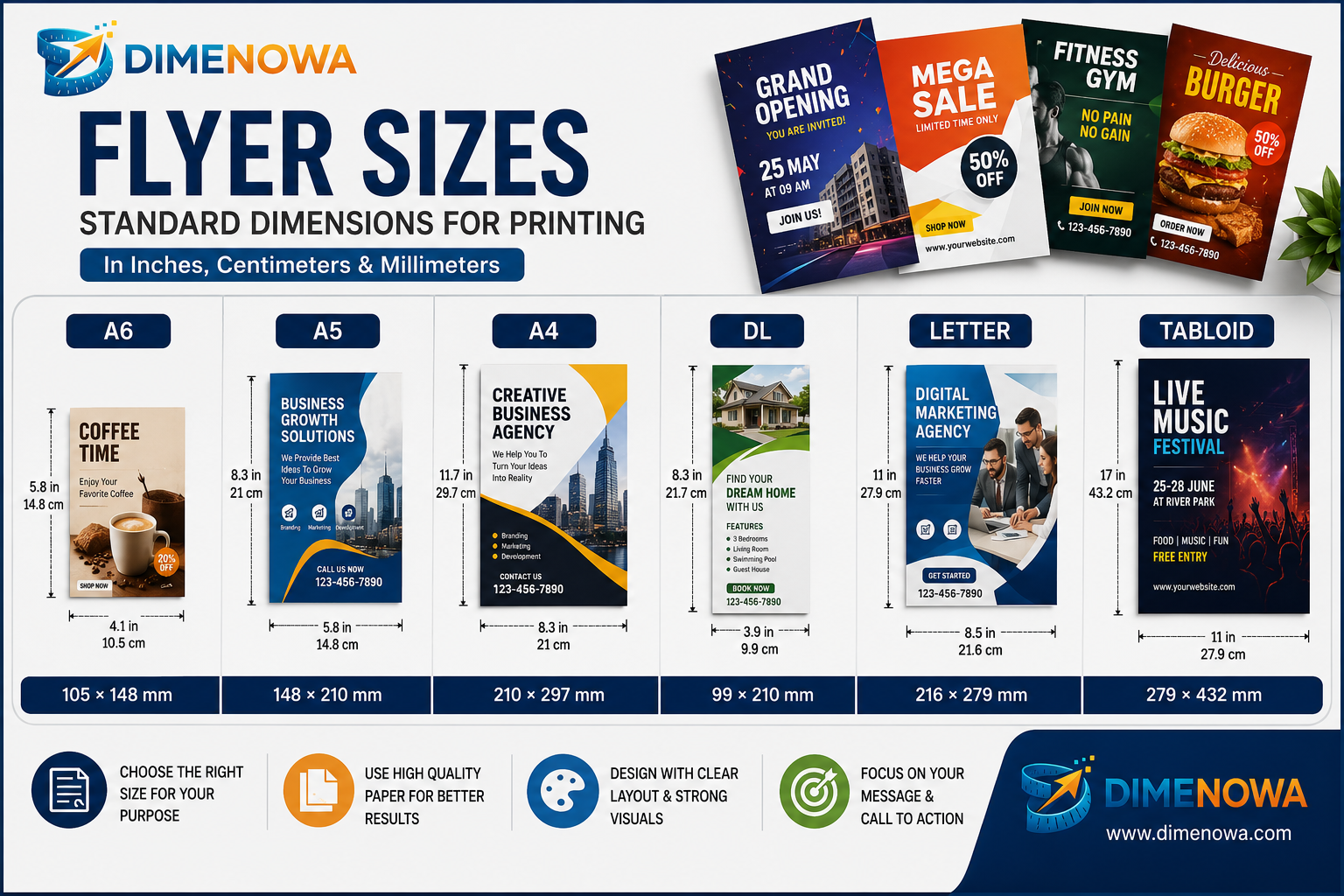
Flyer sizes play a major role in how effective your marketing material looks and feels. Whether you’re promoting a business, announcing an event, advertising a sale, or sharing important information, choosing the right flyer size helps improve readability, printing costs, and customer engagement.
From compact handouts to large promotional sheets, flyer dimensions vary depending on the country, printing standards, and intended purpose. This guide explains the most common flyer sizes in inches, centimeters, and millimeters, compares international and US standards, and helps you choose the perfect size for your project.
What Are Flyer Sizes?
Flyer sizes refer to the physical dimensions of printed promotional sheets used for advertising products, services, events, or announcements.
Different countries use different paper standards. Most of the world follows the ISO 216 A-series paper sizes, while the United States and Canada commonly use Letter-sized paper and other North American formats.
The right flyer size depends on several factors:
- Marketing purpose
- Amount of information
- Design layout
- Printing budget
- Distribution method
Standard Flyer Sizes Chart
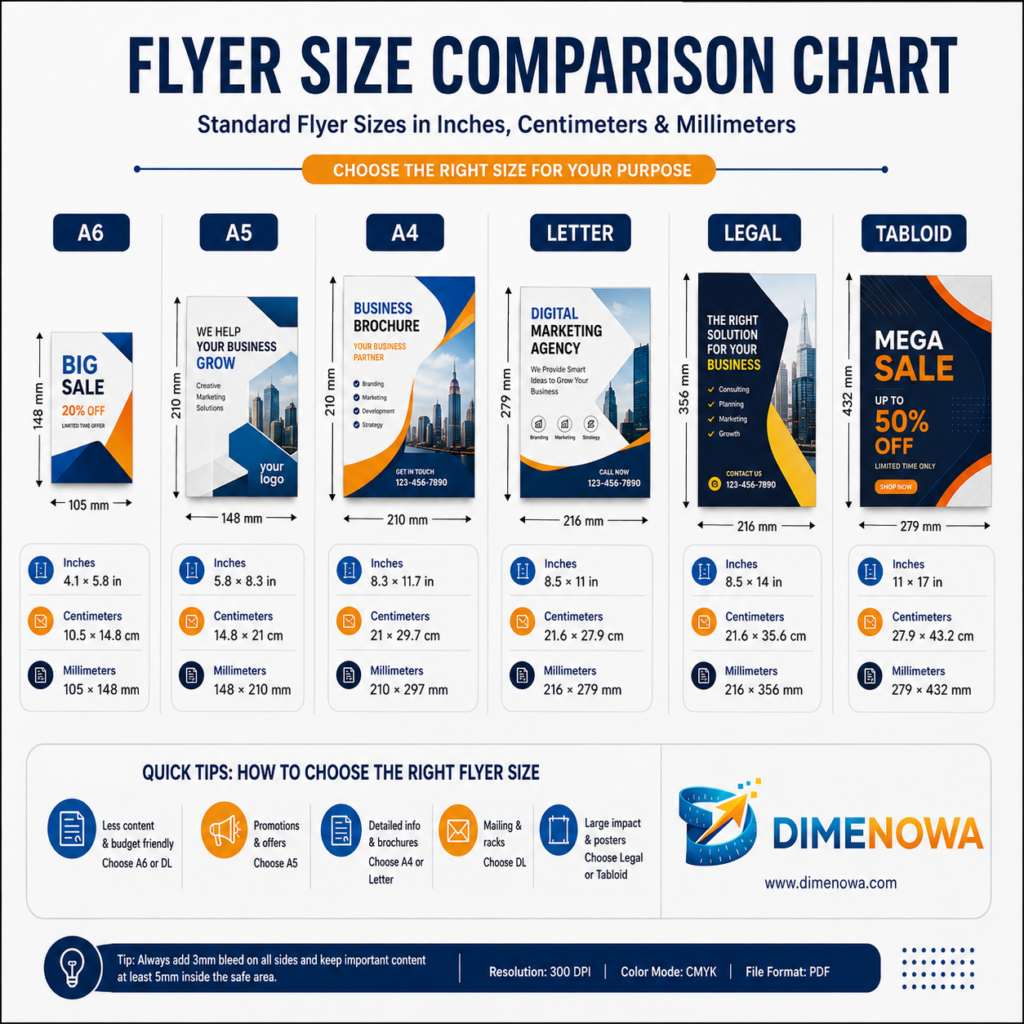
- Standard Flyer Sizes Chart
| Flyer Size | Inches | Centimeters | Millimeters | Common Use |
|---|---|---|---|---|
| A6 | 4.1 × 5.8 in | 10.5 × 14.8 cm | 105 × 148 mm | Postcards, invitations |
| A5 | 5.8 × 8.3 in | 14.8 × 21 cm | 148 × 210 mm | Promotions, menus |
| A4 | 8.3 × 11.7 in | 21 × 29.7 cm | 210 × 297 mm | Product catalogs, information sheets |
| DL | 3.9 × 8.3 in | 9.9 × 21 cm | 99 × 210 mm | Mailers, rack displays |
| Half Letter | 5.5 × 8.5 in | 14 × 21.6 cm | 140 × 216 mm | Event handouts |
| Letter | 8.5 × 11 in | 21.6 × 27.9 cm | 216 × 279 mm | Business flyers |
| Legal | 8.5 × 14 in | 21.6 × 35.6 cm | 216 × 356 mm | Detailed promotions |
| Tabloid | 11 × 17 in | 27.9 × 43.2 cm | 279 × 432 mm | Posters and large advertisements |
Most Popular Flyer Sizes
A6 Flyer
A6 flyers are compact and easy to hand out. They work well for discount coupons, invitations, appointment reminders, and promotional cards.
Best for:
- Restaurant offers
- Event invitations
- Product discounts
- Loyalty cards
A5 Flyer
A5 is one of the world’s most popular flyer sizes because it provides enough room for images and text while remaining affordable to print.
Best for:
- Business promotions
- Menus
- Church events
- School announcements
- Real estate advertising
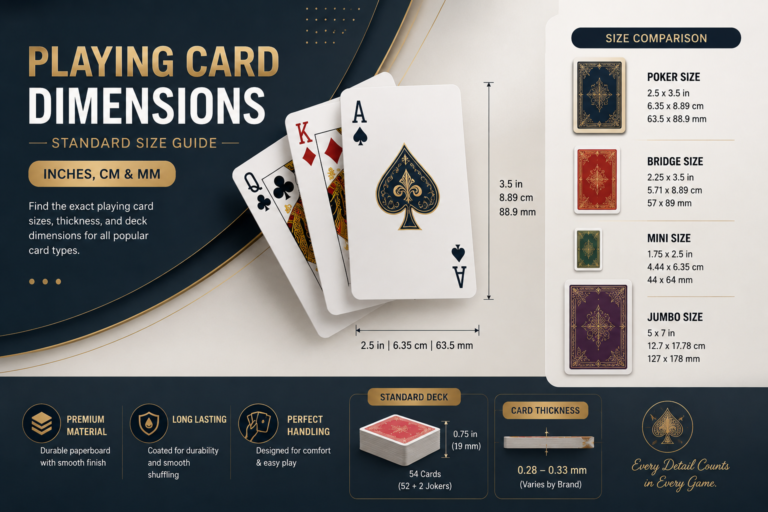
Playing cards are another example of a printed product with standardized dimensions, covered in our Playing Card Dimensions guide
A4 Flyer
A4 flyers offer plenty of space for detailed information, making them ideal for brochures, product descriptions, educational materials, and service guides.
Best for:
- Company profiles
- Product specifications
- Educational content
- Price lists
Letter Size Flyer
Letter size is the standard printing format in the United States and Canada.
Dimensions:
8.5 × 11 inches
It is commonly used for:
- Business advertisements
- Service flyers
- Company announcements
- Community events
DL Flyer
DL flyers are long and narrow, making them perfect for brochure racks and envelopes.
They are commonly used by:
- Hotels
- Restaurants
- Travel agencies
- Corporate marketing
International Flyer Sizes vs US Flyer Sizes
| Feature | ISO A-Series | US Paper Sizes |
|---|---|---|
| Standard | ISO 216 | ANSI |
| Most Popular | A5, A4 | Letter |
| Units | Millimeters | Inches |
| Used In | Europe, Asia, Australia | USA, Canada |
| Aspect Ratio | 1:√2 | Various |
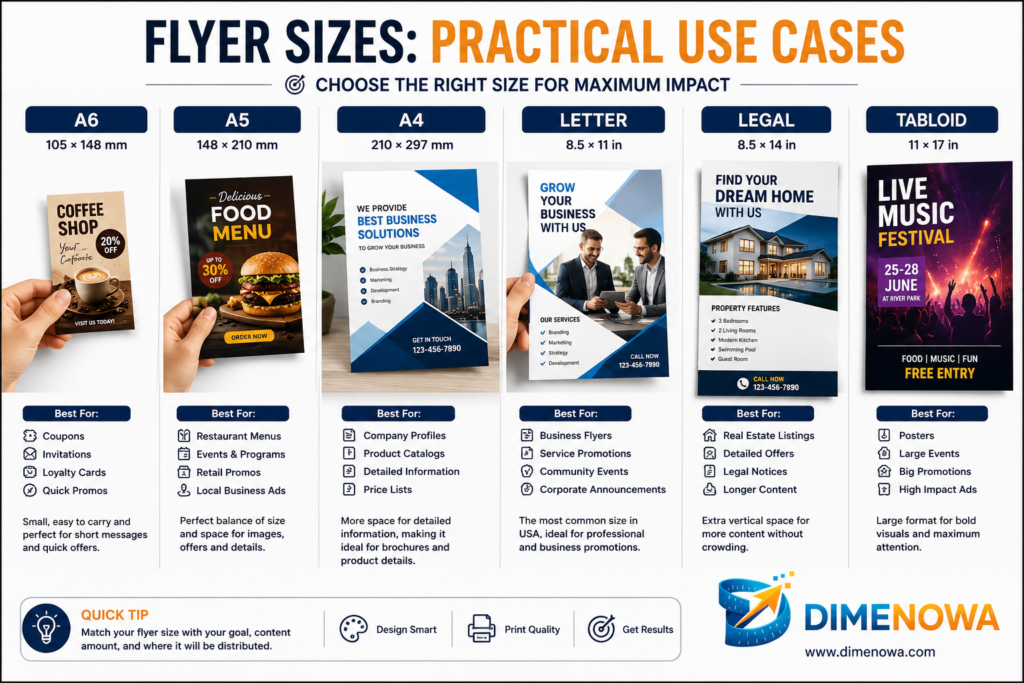
Choosing the Right Flyer Size
- Choosing the Right Flyer Size
Selecting the right flyer depends on your objective.
Choose A6 if you want something small and inexpensive.
Choose A5 if you need the best balance between cost and design flexibility.
Choose A4 when you have more information, images, or pricing tables.
Choose Letter size if your audience is primarily in North America.
Choose DL for direct mail campaigns or brochure holders.
Learn how to convert millimetres to centimetres using simple formulas and conversion charts.
Flyer Orientation
Flyers can be printed in two orientations.
Portrait
Portrait orientation is taller than it is wide.
Ideal for:
- Product information
- Event schedules
- Menus
- Company profiles
Landscape
Landscape orientation is wider than it is tall.
Ideal for:
- Photo-heavy promotions
- Restaurant menus
- Infographics
- Event advertisements
Common Flyer Paper Types
The quality of paper also affects the final appearance.
Gloss Paper
- Bright colors
- Sharp images
- Great for marketing
Matte Paper
- Easy to read
- Professional appearance
- Minimal glare
Silk Paper
- Smooth finish
- Premium feel
- Excellent for corporate branding
Recycled Paper
- Eco-friendly
- Sustainable marketing
- Natural texture
Recommended Flyer Paper Weight
| Paper Weight | Best Use |
|---|---|
| 100–120 GSM | Budget flyers |
| 130–170 GSM | Standard promotional flyers |
| 200–250 GSM | Premium marketing flyers |
| 300 GSM | Luxury flyers and postcards |
Bleed and Safe Margin for Printing
Professional printers recommend adding bleed around the edges.
Standard bleed:
3 mm (0.125 inch)
Safe margin:
At least 5 mm from the edges
This prevents important text or logos from being trimmed during printing.
Single-Sided vs Double-Sided Flyers
| Single-Sided | Double-Sided |
|---|---|
| Lower printing cost | More content space |
| Simple design | Better storytelling |
| Quick promotions | Product catalogs |
| Easy distribution | Premium appearance |
Flyer Sizes for Different Industries
| Industry | Recommended Size |
|---|---|
| Restaurants | A5, DL |
| Real Estate | A4, Letter |
| Schools | A4 |
| Retail Stores | A5 |
| Fitness Centers | A6 |
| Beauty Salons | DL |
| Healthcare | Letter |
| Travel Agencies | DL |
Printing Resolution
For professional-quality printing:
- Resolution: 300 DPI
- Color Mode: CMYK
- Preferred File Format: PDF
- Fonts: Embedded
- Images: High resolution
Following these settings helps produce sharp text and vibrant colors.
Standard paper products come in many formats, and our Notebook Sizes guide explains common notebook dimensions in different measurement units
Design Tips for Better Flyers
- Use a clear headline.
- Leave enough white space.
- Limit fonts to two or three.
- Include high-quality images.
- Add a strong call to action.
- Use readable font sizes.
- Keep branding consistent.
- Include contact information and QR codes when appropriate.
Common Mistakes to Avoid
- Choosing the wrong flyer size.
- Using low-resolution images.
- Overcrowding the layout.
- Ignoring bleed margins.
- Using too many colors.
- Printing without proofreading.
- Selecting paper that doesn’t suit the purpose.
Real Example
Imagine a local coffee shop promoting a weekend discount.
An A6 flyer is inexpensive but may not have enough room for menu items.
An A5 flyer provides space for attractive food photos, pricing, business hours, and a QR code linking to online ordering.
For a product catalog featuring multiple beverages and seasonal offers, an A4 flyer becomes a better option because it accommodates more information without feeling cluttered.
Frequently Asked Questions
What is the standard flyer size?
The most common flyer sizes are A5 (148 × 210 mm) internationally and Letter (8.5 × 11 inches) in the United States.
Which flyer size is best for marketing?
A5 is widely considered the best overall choice because it balances printing cost, readability, and design flexibility.
What is the smallest flyer size?
A6 is one of the smallest standard flyer sizes and is commonly used for postcards, coupons, and invitations.
What is the largest standard flyer size?
Tabloid (11 × 17 inches) and A3 (297 × 420 mm) are among the largest standard flyer sizes used for promotional printing.
What paper weight is best for flyers?
Most businesses use 130–170 GSM paper because it offers durability while remaining affordable.
Should flyers be printed in portrait or landscape?
Both orientations work well. Portrait suits informational flyers, while landscape is ideal for image-focused designs and menus.
What resolution should flyers be printed at?
Professional printers recommend 300 DPI to ensure sharp text and high-quality images.
Can I print flyers at home?
Yes. Small quantities can be printed using a high-quality inkjet or laser printer, while large print runs are usually more cost-effective through commercial printing services.
Conclusion
Choosing the right Flyer Sizes depends on your audience, design, budget, and printing needs. A6 is perfect for compact promotions, A5 remains the most versatile option for everyday marketing, while A4 and Letter sizes provide additional space for detailed content. By selecting the appropriate dimensions, paper weight, orientation, and print settings, you can create professional flyers that attract attention and effectively communicate your message. Whether you’re designing promotional materials for a business, event, or organization, understanding standard Flyer Sizes helps ensure better print quality and stronger marketing