Hockey Rink Dimensions 2026: Official NHL & IIHF Size Guide
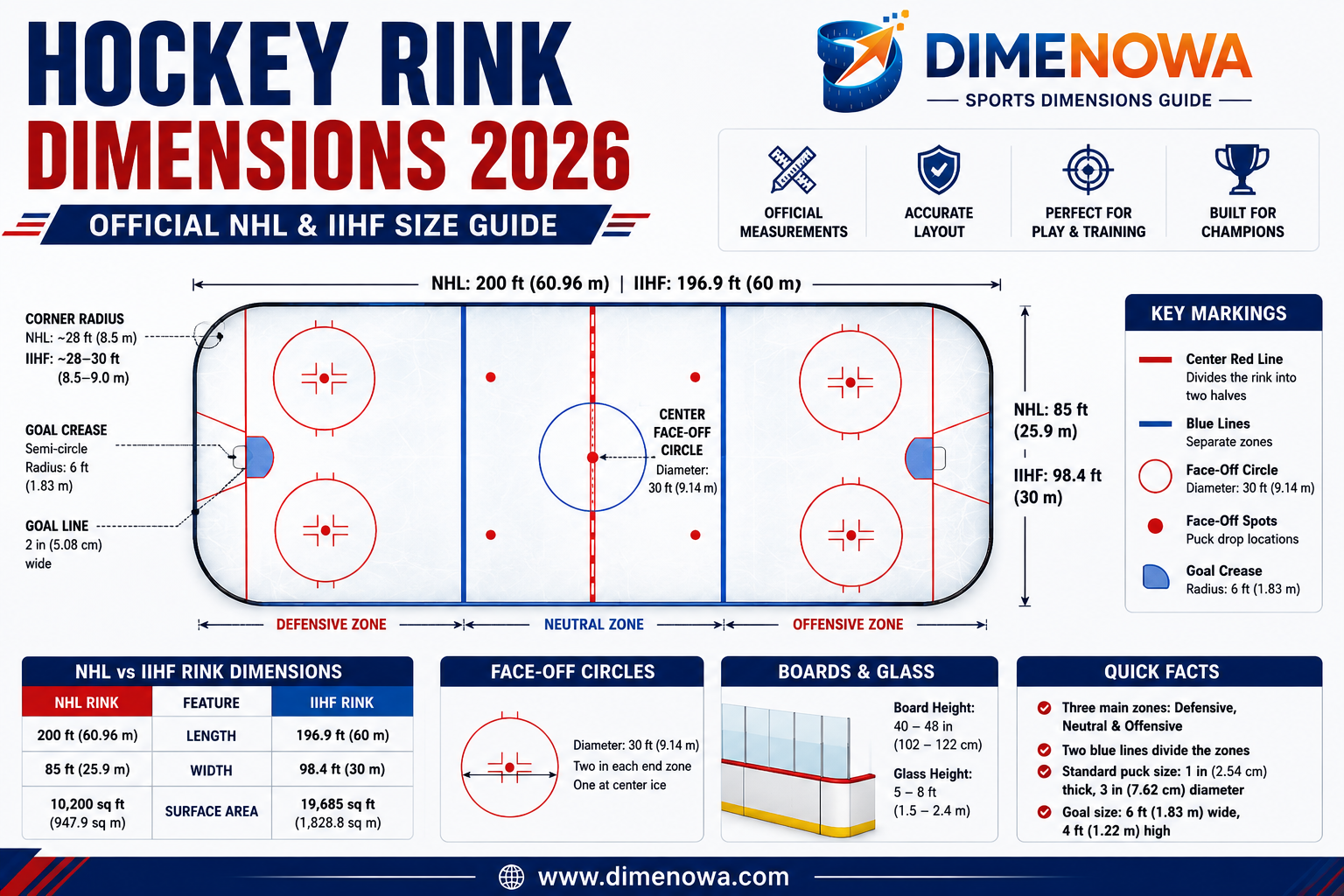
Whether you’re building a practice rink, coaching a team, or simply learning about ice hockey, understanding the correct rink dimensions is essential. The size of the playing surface affects player movement, game strategy, passing lanes, and overall pace of play. Professional leagues around the world follow standardized measurements to ensure fair competition and consistent gameplay.
This guide explains official NHL and IIHF rink sizes, playing zones, markings, goal crease dimensions, and the differences between North American and international hockey rinks. You’ll also learn how each measurement influences the game and which rink size is used at different levels of competition.
Standard Hockey Rink Dimensions
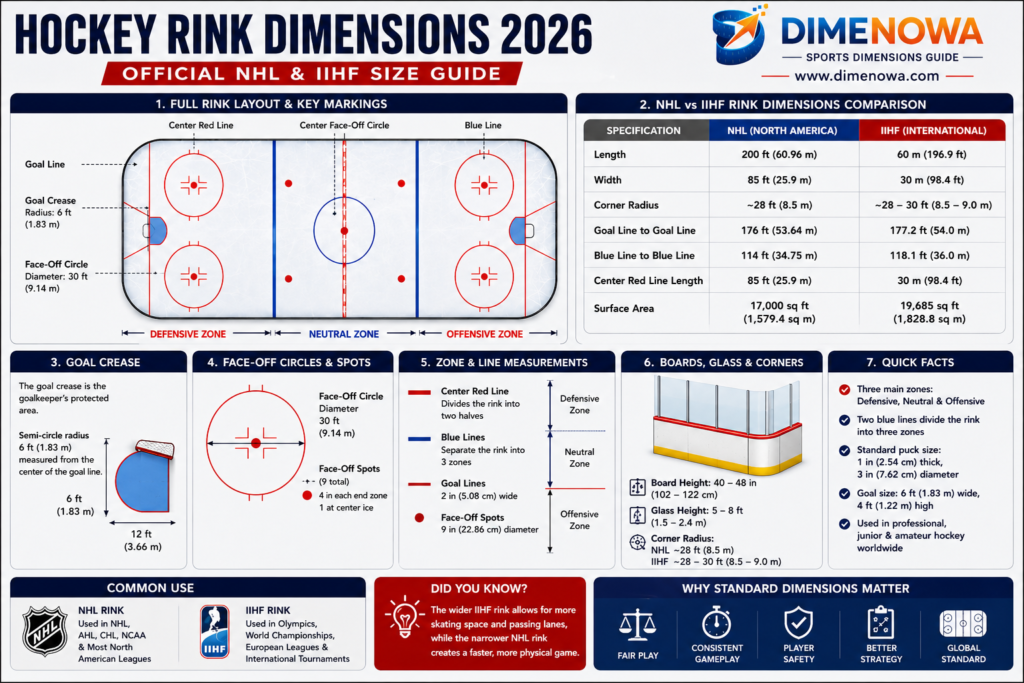
Professional hockey rinks generally follow one of two official standards: the National Hockey League (NHL) standard and the International Ice Hockey Federation (IIHF) standard.
| Standard | Length | Width |
|---|---|---|
| NHL | 200 ft (60.96 m) | 85 ft (25.9 m) |
| IIHF | 60 m (196.9 ft) | 30 m (98.4 ft) |
The NHL rink is narrower than the IIHF rink, creating a faster and more physical style of play. The wider IIHF rink provides additional skating space and encourages puck possession and passing.
NHL vs IIHF Hockey Rink
Although both rinks have nearly the same length, their widths differ significantly.
NHL Hockey Rink
The NHL uses a rink measuring 200 × 85 feet (60.96 × 25.9 meters).
Its narrower design creates:
- Faster transitions
- More body checking
- Quicker shots
- Increased physical play
- Less open ice
This layout is used throughout the United States and Canada in professional NHL games.
Compare board sizes in our detailed Skateboard Dimensions guide.
IIHF Hockey Rink
The IIHF standard rink measures 60 × 30 meters (196.9 × 98.4 feet).
The additional width offers:
- More skating space
- Better puck control
- Longer passing lanes
- Greater emphasis on speed and skill
- Fewer physical collisions
Most international tournaments and many European leagues use this larger rink size.
Hockey Rink Zones
Every hockey rink is divided into three main zones by two blue lines.
| Zone | Purpose |
|---|---|
| Defensive Zone | Area where a team protects its goal |
| Neutral Zone | Middle section used during transitions |
| Offensive Zone | Area where a team attacks the opponent’s goal |
These zones are important for offsides, positioning, and tactical play.
Key Hockey Rink Markings
Several markings help players and officials follow the rules during a game.
| Marking | Standard Purpose |
|---|---|
| Center Red Line | Divides the rink into two halves |
| Blue Lines | Separate offensive, neutral, and defensive zones |
| Goal Line | Determines goals and icing calls |
| Face-Off Circles | Used to restart play |
| Goal Crease | Protected area around the goalkeeper |
| Face-Off Spots | Designated puck drop locations |
Each marking is painted according to official NHL and IIHF regulations to maintain consistency across all professional rinks.
Discover the differences between cruising and downhill boards in our Longboard Dimensions article.
Goal Crease Dimensions
The goal crease is a specially marked area directly in front of each net.
Its purpose is to protect the goalkeeper while clearly defining legal scoring situations. Although the exact shape differs slightly between NHL and IIHF regulations, the crease remains one of the most important markings on the rink because it affects goaltender interference and goal reviews.
Face-Off Circle Dimensions
Face-off circles ensure players are correctly positioned when play resumes.
| Feature | Measurement |
|---|---|
| Face-Off Circle Diameter | 30 ft (9.14 m) |
| Center Face-Off Circle | Located at center ice |
| End Zone Face-Off Circles | Two in each attacking and defensive zone |
These markings are identical on most professional rinks and are used throughout NHL and IIHF competitions.
See how court sizes compare in our comprehensive Basketball Court Dimensions guide
Boards and Protective Glass
The boards surrounding the rink keep the puck in play while protecting players and spectators.
| Feature | Standard Measurement |
|---|---|
| Board Height | 40–48 inches (102–122 cm) |
| Protective Glass Height | 5–8 ft (1.5–2.4 m), depending on location |
Corners are fitted with flexible boards and curved glass to improve safety during high-speed collisions.
Corner Radius
Instead of sharp corners, hockey rinks use rounded corners to maintain smooth puck movement.
| Standard | Corner Radius |
|---|---|
| NHL | Approximately 28 ft (8.5 m) |
| IIHF | Approximately 28–30 ft (8.5–9.0 m) |
Rounded corners reduce dead areas and keep the game flowing at a faster pace.
Why Hockey Rink Dimensions Matter
Official rink dimensions influence nearly every aspect of the game.
Benefits include:
- Consistent gameplay across leagues
- Fair competition
- Accurate player positioning
- Standardized coaching strategies
- Improved player safety
- Better puck movement and game flow
Even small differences in rink width can significantly change team tactics and playing style.
Explore board measurements for every skill level in our Surfboard Dimensions guide.
Conclusion
Understanding the official Hockey Rink Dimensions 2026 is essential for players, coaches, facility owners, and hockey fans. Whether you’re comparing NHL and IIHF rink sizes or learning about face-off circles, goal creases, and rink markings, these standardized measurements help ensure fair competition and consistent gameplay. Knowing the correct rink dimensions also makes it easier to design training facilities and better appreciate the strategies used in professional ice hockey.
Frequently Asked Questions
1. What are the official NHL hockey rink dimensions?
An NHL rink measures 200 × 85 feet (60.96 × 25.9 meters).
2. What are the official IIHF hockey rink dimensions?
An IIHF rink measures 60 × 30 meters (196.9 × 98.4 feet).
3. Why is the IIHF rink wider than the NHL rink?
The wider IIHF rink creates more open ice, encouraging faster skating, puck possession, and passing.
4. How many zones are on a hockey rink?
A hockey rink has three zones: the defensive zone, neutral zone, and offensive zone.
5. What is the diameter of a face-off circle?
The standard face-off circle has a diameter of 30 feet (9.14 meters).
6. Which hockey rink size is used in international tournaments?
Most international competitions, including IIHF championships and many European leagues, use the IIHF standard rink.