Surfboard Dimensions: Complete Size Guide 2026
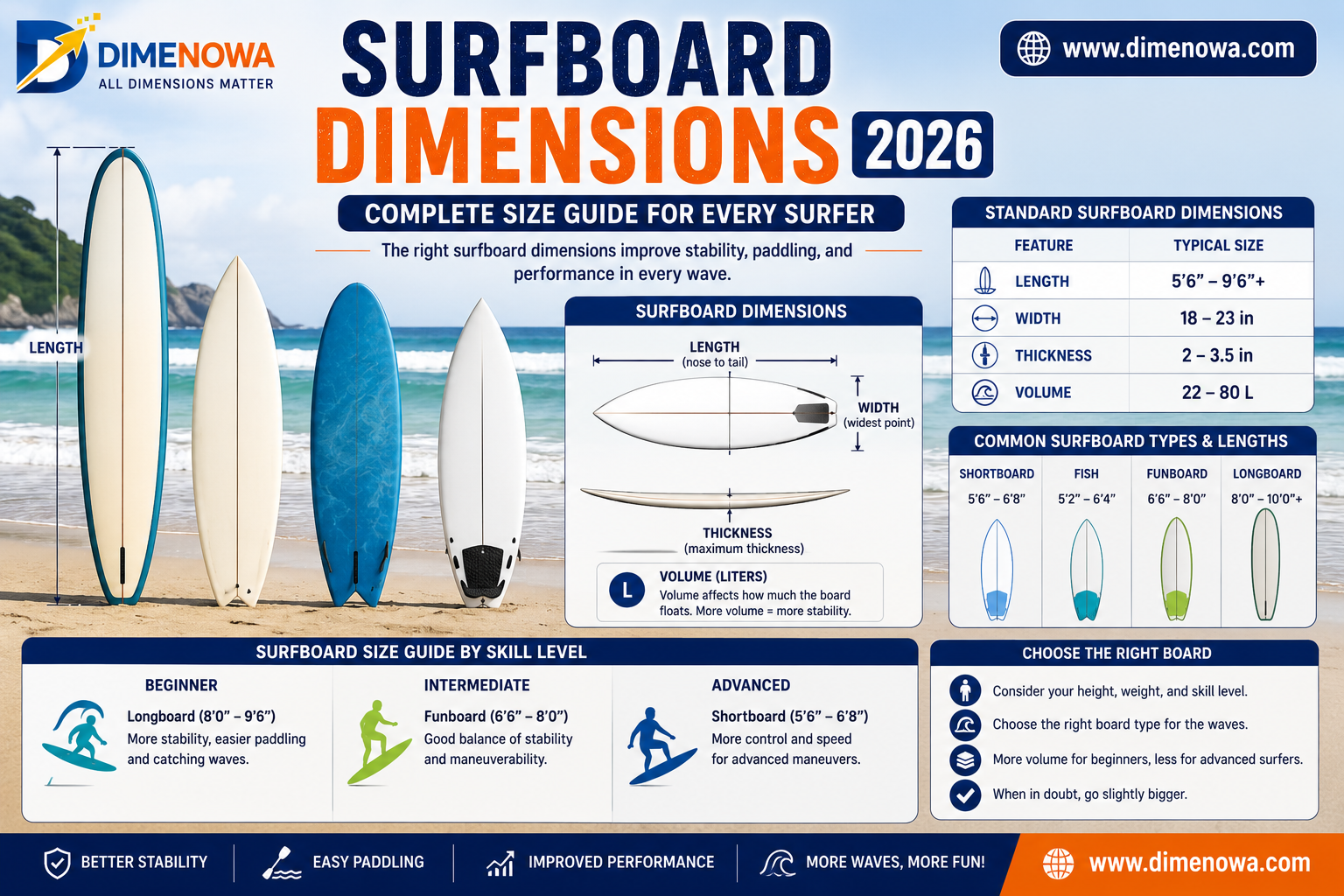
- Surfboard Dimensions Guide
Surfboard Dimensions play a major role in how a surfboard performs on the water. The right size affects stability, paddling speed, wave-catching ability, and maneuverability. Whether you’re buying your first board or upgrading to a performance model, understanding surfboard dimensions helps you choose the perfect fit.
Manufacturers such as Channel Islands, Firewire, Lost Surfboards, JS Industries, and Haydenshapes produce boards in a wide range of sizes to suit beginners and professional surfers.
What Are Surfboard Dimensions?
Surfboard dimensions refer to the three primary measurements of a surfboard:
- Length
- Width
- Thickness
Modern surfboards also include volume (measured in liters), which helps determine how well the board floats.
Standard Surfboard Dimensions
| Feature | Typical Size |
|---|---|
| Length | 5’6″–9’6″+ |
| Width | 18–23 in |
| Thickness | 2–3.5 in |
| Volume | 22–80 L |
These measurements vary depending on the board type and the surfer’s experience. Surfboard dimensions are commonly listed in feet and inches. Read our complete Inch Measurement guide to understand these measurements accurately.
Common Surfboard Sizes
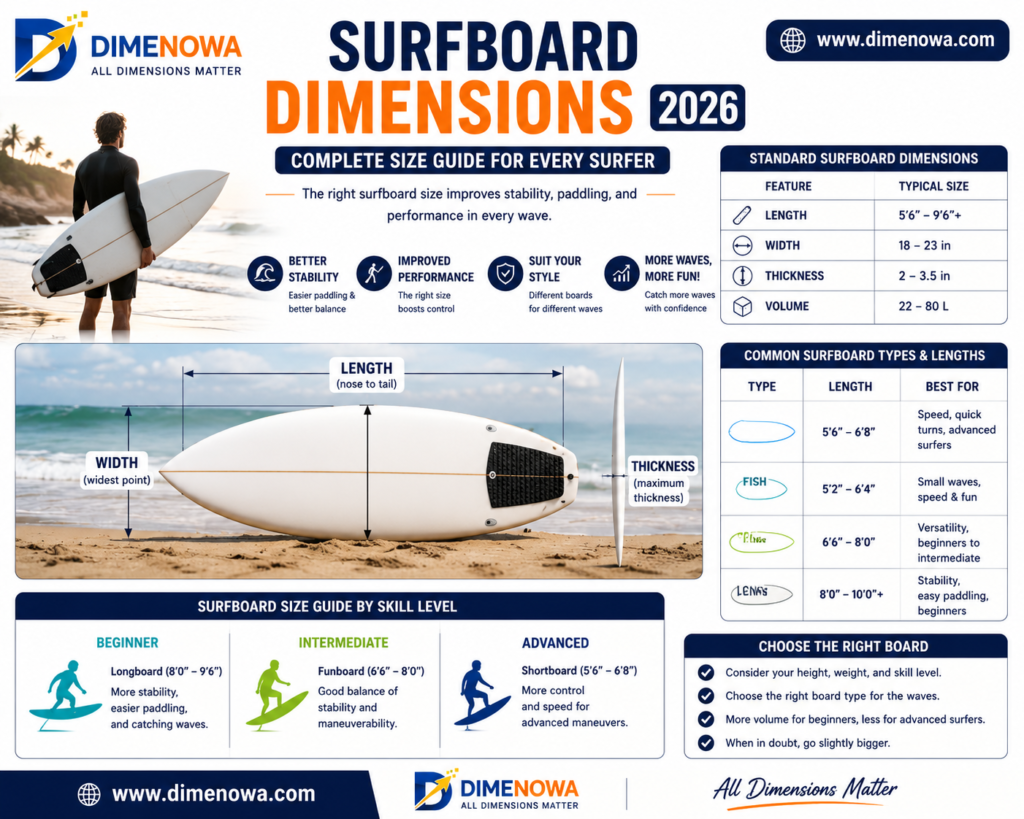
- Common Surfboard Sizes
| Surfboard Type | Typical Length |
|---|---|
| Shortboard | 5’6″–6’8″ |
| Fish | 5’2″–6’4″ |
| Funboard | 6’6″–8’0″ |
| Longboard | 8’0″–10’0″+ |
Longer boards provide greater stability, while shorter boards offer better maneuverability.
Choosing the Right Surfboard
When selecting a surfboard, consider:
- Your height and weight
- Skill level
- Wave conditions
- Surfing style
- Board volume
Beginners usually benefit from longer and wider boards because they provide more stability and make catching waves easier.
Surfboard Dimensions by Skill Level
Choosing the right surfboard depends on your experience. A beginner needs more stability, while advanced surfers usually prefer smaller boards for better control.
| Skill Level | Recommended Board |
|---|---|
| Beginner | Longboard (8’0″–9’6″) |
| Intermediate | Funboard (6’6″–8’0″) |
| Advanced | Shortboard (5’6″–6’8″) |
A larger board provides better balance and makes catching waves easier. Smaller boards are faster and more responsive but require greater skill.
Interested in other sports equipment size guides? Explore our Skateboard Dimensions article to learn about standard skateboard measurements.
Tips for Choosing the Right Surfboard
Keep these tips in mind before buying a surfboard:
- Choose a board based on your height and weight.
- Beginners should select a board with more volume for extra stability.
- Pick the right board type according to the waves you usually surf.
- Check the board’s width and thickness for better balance.
- If you’re unsure, choose a slightly larger board rather than one that’s too small.
Common Mistakes
Many surfers struggle because they:
- Buy a board that is too short for their experience.
- Ignore board volume when making a purchase.
- Focus only on appearance instead of performance.
- Choose an advanced shortboard before mastering the basics.
Selecting the right size from the beginning helps you progress faster and enjoy surfing more.
Real Example
A beginner surfer who is 5 ft 10 in (178 cm) and weighs around 75 kg (165 lb) may find an 8-foot longboard with approximately 60–70 liters of volume much easier to paddle and balance than a 6-foot shortboard. As skills improve, they can gradually switch to a shorter board.
Conclusion
Understanding Surfboard Dimensions is essential for choosing a board that matches your height, weight, skill level, and surfing style. By considering the board’s length, width, thickness, and volume, you can improve stability, catch more waves, and progress with confidence. Whether you’re a beginner or an experienced surfer, selecting the right surfboard size makes every session more enjoyable. Looking for court measurements? Read our Basketball Court Dimensions guide to explore official NBA and FIBA court sizes.
Frequently Asked Questions
What are standard surfboard dimensions?
Most surfboards range from 5’6″ to over 9’6″ in length, 18–23 inches in width, and 2–3.5 inches in thickness.
What is the best surfboard size for beginners?
Most beginners learn faster on an 8 to 9-foot longboard because it offers excellent stability and buoyancy.
Why is surfboard volume important?
Volume determines how much the board floats. Higher-volume boards are generally easier to paddle and balance.
What is the difference between a shortboard and a longboard?
Shortboards are designed for speed, quick turns, and advanced maneuvers, while longboards offer better stability and are ideal for beginners.
How do I know which surfboard size is right for me?
Choose a board based on your height, weight, skill level, and the type of waves you plan to surf.