Baseball Dimensions 2026: Official MLB Field Size & Measurement Guide
Baseball is played on one of the most recognizable fields in sports, yet many people don’t know the official measurements that define the game. From the distance between bases to the height of the pitching mound, every dimension is carefully standardized to ensure fair competition and consistent gameplay.
This guide explains the official baseball field dimensions, baseball diamond measurements, pitching mound specifications, base paths, and outfield distances. Whether you’re building a field, coaching a team, or simply curious about the game, this article covers everything you need to know.
Baseball Dimensions 2026
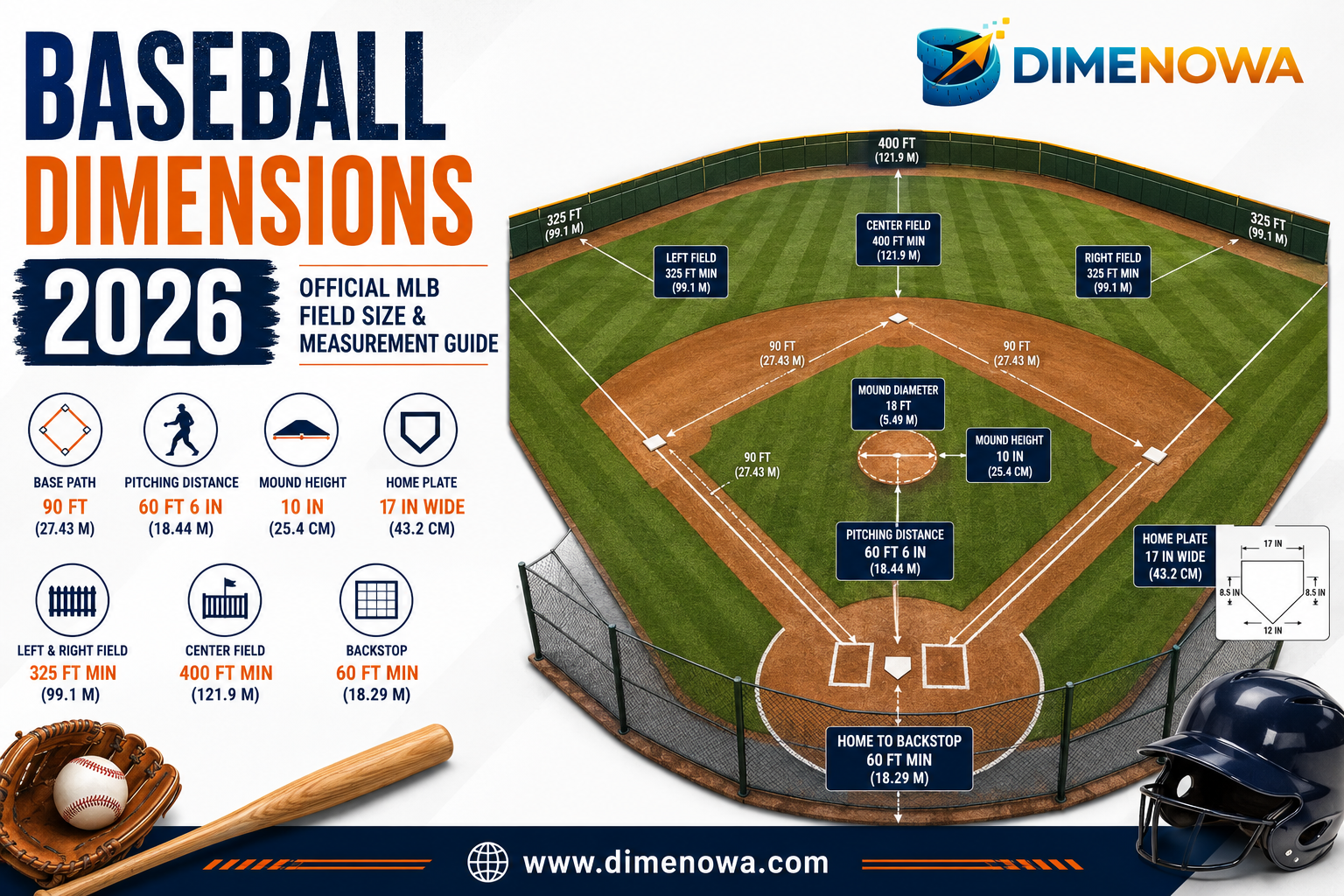
Major League Baseball (MLB) follows official field standards that are used as the benchmark worldwide.
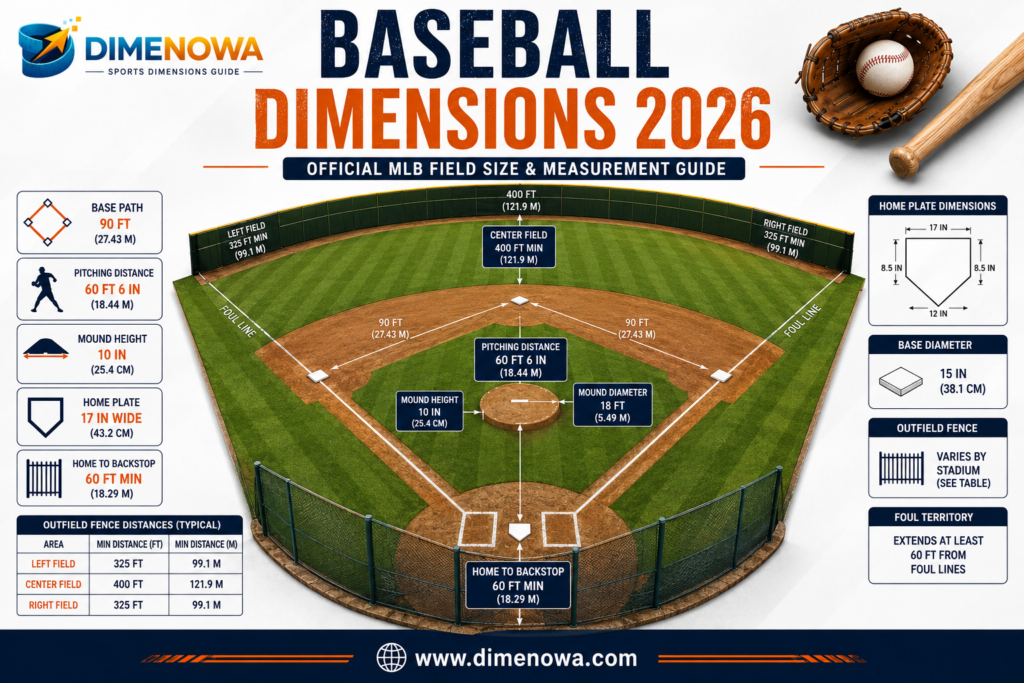
| Feature | Official Measurement |
|---|---|
| Base Path | 90 ft (27.43 m) |
| Pitching Distance | 60 ft 6 in (18.44 m) |
| Pitcher’s Mound Diameter | 18 ft (5.49 m) |
| Home Plate to Backstop | 60 ft minimum |
| Foul Pole Distance | Varies by stadium |
These dimensions create a balanced playing field for both pitchers and hitters.
Baseball Diamond Dimensions
The baseball diamond is a square formed by four bases.
| Component | Measurement |
|---|---|
| Home to First Base | 90 ft |
| First to Second Base | 90 ft |
| Second to Third Base | 90 ft |
| Third to Home Plate | 90 ft |
The distance from home plate to second base is approximately 127 ft 3⅜ in (38.79 m).
If you need help converting measurements, read our Millimetre to Centimetre Conversion guide.
Base Path Measurements
The 90-foot base path is one of the defining features of professional baseball.
This distance provides the right balance between offense and defense, allowing close plays while rewarding speed and skill.
Professional leagues, including MLB, use the same base path dimensions for every game.
Interested in ice hockey? Read our Hockey Rink Dimensions guide to compare official NHL and IIHF rink measurements.
Pitching Mound Dimensions
The pitching mound plays a major role in the game because even slight measurement changes affect pitching performance.
| Feature | Official Size |
|---|---|
| Pitching Rubber to Home Plate | 60 ft 6 in |
| Mound Height | 10 in (25.4 cm) |
| Mound Diameter | 18 ft |
The mound gradually slopes downward toward home plate, helping pitchers maintain a natural throwing motion.
Home Plate Dimensions
Home plate has a unique five-sided shape.
| Feature | Measurement |
|---|---|
| Width Across Front | 17 in (43.2 cm) |
| Side Lengths | 8.5 in |
| Rear Angled Sides | 12 in |
These official dimensions remain consistent across professional baseball.
Baseball Field Layout
A regulation baseball field consists of several important areas.
- Infield (baseball diamond)
- Outfield
- Pitcher’s mound
- Home plate
- Foul territory
- Dugouts
- Bullpens
- Warning track
Each section is designed to support smooth gameplay and player safety.
See how court sizes compare in our comprehensive Basketball Court Dimensions guide
Outfield Fence Distances
Unlike the infield, outfield fence distances can vary from stadium to stadium.
| Area | Typical Distance |
|---|---|
| Left Field | 320–350 ft |
| Center Field | 400–410 ft |
| Right Field | 320–350 ft |
Although the fences differ, MLB requires a minimum distance of 325 feet down each foul line and 400 feet to center field for newly constructed professional parks.
Little League vs MLB Dimensions
Youth baseball uses smaller field dimensions to suit younger players.
| Feature | Little League | MLB |
|---|---|---|
| Base Path | 60 ft | 90 ft |
| Pitching Distance | 46 ft | 60 ft 6 in |
| Outfield Fence | 200–225 ft | 320–410+ ft |
These scaled-down measurements help young athletes develop proper skills before transitioning to regulation fields.
Why Baseball Field Dimensions Matter
Official dimensions provide several important benefits:
- Fair competition
- Consistent gameplay
- Better player development
- Accurate coaching and training
- Compliance with MLB and league regulations
Using regulation measurements also makes it easier for players to transition between different competition levels.
Learn more about the official Golf Ball Dimensions, including standard diameter, weight, and tournament specifications.
Conclusion
Understanding the official Baseball Dimensions 2026 helps players, coaches, field designers, and fans appreciate how every measurement influences the game. From the 90-foot base paths and 60-foot 6-inch pitching distance to the varying outfield fence lengths, each dimension contributes to baseball’s unique strategy and pace. Whether you’re building a field or simply learning the rules, following these official measurements ensures an authentic baseball experience.
Frequently Asked Questions
1. What are the official baseball field dimensions?
A regulation MLB baseball field uses 90-foot base paths and a 60-foot 6-inch pitching distance.
2. How far apart are the bases?
Each base is 90 feet (27.43 meters) from the next.
3. How high is a baseball pitching mound?
The pitching mound is 10 inches (25.4 cm) above home plate level.
4. What is the distance from home plate to second base?
The distance is approximately 127 feet 3⅜ inches (38.79 meters).
5. Why are outfield fence distances different?
Each stadium has a unique design, so outfield fence distances vary while still meeting MLB minimum standards.
6. Are Little League baseball fields smaller?
Yes. Little League fields use shorter base paths, a closer pitching distance, and smaller outfield dimensions.