Snowboard Sizes: Complete Size Guide 2026
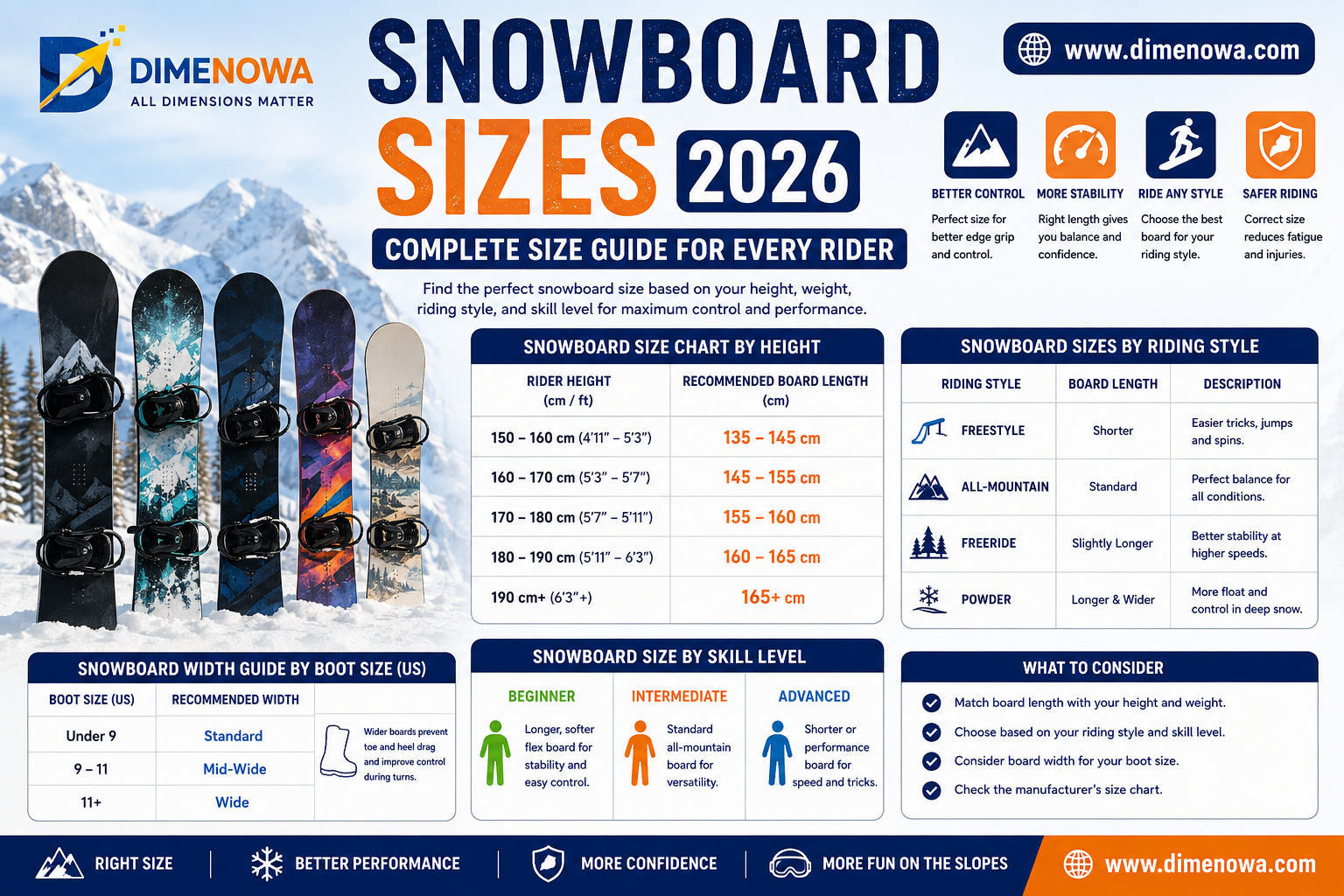
Choosing the correct Snowboard Sizes is one of the most important decisions for any rider. A properly sized snowboard improves balance, turning, stability, and overall control on the slopes. Whether you’re a beginner or an experienced snowboarder, selecting the right board makes riding safer and more enjoyable.
Popular snowboard brands such as Burton, CAPiTA, Lib Tech, Jones, Ride, and Nitro manufacture boards in different lengths to suit various riders and riding styles.
What Are Snowboard Sizes?
Snowboard size refers to the overall length of the snowboard, usually measured in centimeters (cm). The ideal size depends on several factors, including your height, weight, boot size, and preferred riding style.
Choosing the correct snowboard size helps improve stability, edge control, and maneuverability.
Standard Snowboard Size Chart
| Rider Height | Recommended Board Length |
|---|---|
| 150–160 cm | 135–145 cm |
| 160–170 cm | 145–155 cm |
| 170–180 cm | 155–160 cm |
| Over 180 cm | 160–165+ cm |
These recommendations may vary slightly depending on your weight and riding style.
Snowboard Sizes by Riding Style
| Riding Style | Recommended Board |
|---|---|
| Freestyle | Slightly shorter board |
| All-Mountain | Standard length |
| Freeride | Slightly longer board |
| Powder | Longer and wider board |
Freestyle riders usually prefer shorter boards for easier tricks, while freeride riders benefit from longer boards that provide better stability at higher speeds.
Snowboard specifications often include measurements in inches and centimeters. Read our Inch Measurement guide to understand these units easily.
Choosing the Right Snowboard
Before buying a snowboard, consider:
- Your height
- Your weight
- Boot size
- Skill level
- Riding style
- Snow conditions
Selecting the correct size helps improve confidence and overall riding performance.
Snowboard Sizes by Skill Level
Your experience level plays an important role when choosing a snowboard. Beginners usually benefit from longer and more stable boards, while advanced riders often prefer shorter boards for better maneuverability and tricks.
| Skill Level | Recommended Board |
|---|---|
| Beginner | Longer, softer flex board |
| Intermediate | Standard all-mountain board |
| Advanced | Shorter or performance-specific board |
If you’re just starting, don’t choose an aggressive expert board. A forgiving snowboard will help you learn faster and improve your confidence on the slopes.
Interested in other sports equipment size guides? Explore our Skateboard Dimensions article to learn about standard skateboard measurements.
Snowboard Width Guide
Besides length, snowboard width is equally important. Riders with larger boots should choose a wide snowboard to prevent their toes and heels from dragging in the snow during turns.
| Boot Size (US) | Recommended Width |
|---|---|
| Under 9 | Standard |
| 9–11 | Mid-Wide |
| 11+ | Wide Snowboard |
Choosing the correct width improves stability, carving performance, and overall control.
Tips for Choosing the Right Snowboard
Before purchasing a snowboard, keep these practical tips in mind:
- Match the board to your height and weight.
- Select a snowboard based on your riding style.
- Beginners should choose a softer flex for easier control.
- Consider board width if you wear larger boots.
- Check the manufacturer’s sizing chart before buying.
A properly sized snowboard makes turning easier and reduces fatigue during long riding sessions.
Looking for court measurements? Read our Basketball Court Dimensions guide to explore official NBA and FIBA court sizes
Common Mistakes
Many snowboarders choose the wrong board because they:
- Buy a board based only on appearance.
- Ignore their body weight.
- Choose an advanced board as a beginner.
- Forget to consider snowboard width.
- Select a board that doesn’t match their riding style.
Avoiding these mistakes will improve both safety and performance.
Real Example
Suppose a rider is 175 cm (5 ft 9 in) tall and weighs 75 kg (165 lb). An all-mountain snowboard between 155 and 158 cm would usually provide the best balance of stability, control, and versatility. However, if the rider mainly enjoys freestyle riding, a slightly shorter board around 152–154 cm may be a better choice.
Conclusion
Choosing the correct Snowboard Sizes is essential for improving balance, comfort, and overall riding performance. The ideal snowboard depends on your height, weight, boot size, skill level, and riding style. Whether you’re learning your first turns or exploring advanced terrain, selecting the right snowboard size will help you ride with greater confidence and control.
If you’re looking for board sports measurements, don’t miss our complete Longboard Dimensions guide covering deck length, width, wheelbase, and wheel sizes.
Frequently Asked Questions
How do I choose the correct snowboard size?
Choose a snowboard based on your height, weight, riding style, and skill level. Most manufacturers also provide sizing charts for accurate recommendations.
Is snowboard size based on height or weight?
Both matter. Height provides a starting point, but weight is often the more important factor when selecting the correct snowboard.
What size snowboard is best for beginners?
Most beginners should choose a slightly longer snowboard with a softer flex because it offers better stability and easier control.
What is a wide snowboard?
A wide snowboard is designed for riders with larger boot sizes to reduce toe and heel drag during turns.
Should freestyle riders use shorter snowboards?
Yes. Freestyle riders usually prefer slightly shorter boards because they are easier to spin, jump, and control in terrain parks.
Can I ride a snowboard that is too long?
You can, but it may feel harder to turn and control, especially if you’re a beginner.
Which snowboard brands are most popular?
Popular brands include Burton, Lib Tech, CAPiTA, Jones, Ride, Nitro, Arbor, and Salomon.